
Prince Edward County Ownership History Sources
Pick the record source that fits the era. The Circuit Court Clerk's coverage page sets the online index at 1916. Images there begin at 1940. Anything earlier lives at the Library of Virginia. Its microfilm catalog holds the old general grantor and grantee indexes. It also holds the deed books themselves. The Chancery Records Index adds wills, plats, land divisions, and heir details. Those files explain transfers that never formed a simple sale chain.
| Source | Years It Covers | Where Held | What It Shows |
|---|---|---|---|
| Online land index | 1916 forward | Circuit Court Clerk / Virginia SRA | Recorded party, type, date, and citation when shown |
| Online deed images | 1940 forward | SRA; access may require a Clerk-authorized subscription | Instrument image, if available for the entry |
| General grantor / grantee indexes | 1754-1916 | Library of Virginia microfilm catalog and reels | Older names and deed references |
| Historic deed books | 1754-1902 in the listed Books 1-47 | Library of Virginia finding aid or Clerk inquiry | Recorded conveyances and land descriptions |
| Chancery causes | 1754-1953; images 1754-1913 | Virginia Memory Chancery Index; later material may be with Clerk | Heirs, divisions, wills, deeds, and plats in cases |
For deeds recorded since 1916, start with Secure Remote Access. Earlier transfers call for the LVA general indexes. Then go to the cited deed book. Chancery records help when a partition, estate, or title dispute sits behind a transfer. The county publishes no older tax-roll series. It also offers no local subdivision plat index. Work from the sources that exist rather than a substitute.
Prince Edward County's 1916 Index Handoff
The Clerk's modern page splits two things apart. The searchable party index begins January 1, 1916. Online document images begin January 1, 1940. A deed recorded between those dates can still show up online with its party names and instrument citation, even where the image is absent. Before deciding an earlier owner's deed is missing, record the parties, the date, the book and page or instrument number, and the document type. Those identifiers make any request to the Clerk precise. The Clerk's published land-record information is the county's own starting point for the online index and the VADeed Alert route, so review the Prince Edward County Circuit Court Clerk land-record page for current access details.
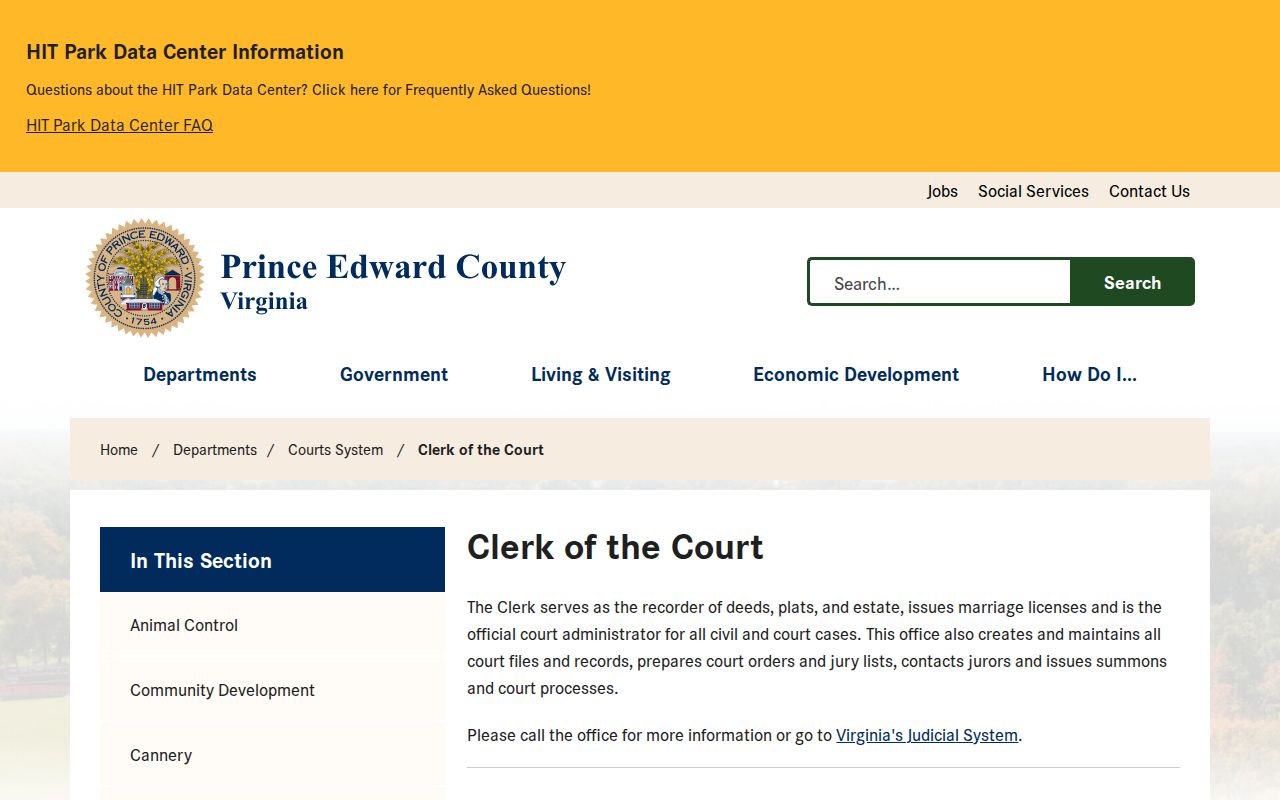
The Clerk's page displays that date handoff between index and image coverage. For older titles, continue into the Library of Virginia's deed-book and general-index collections. Virginia Secure Remote Access is the statewide gateway for participating circuit-court land records. Read its notice before searching. Remote index and image access may require an authorized session. Open the Virginia Secure Remote Access portal for the deed-index search route.
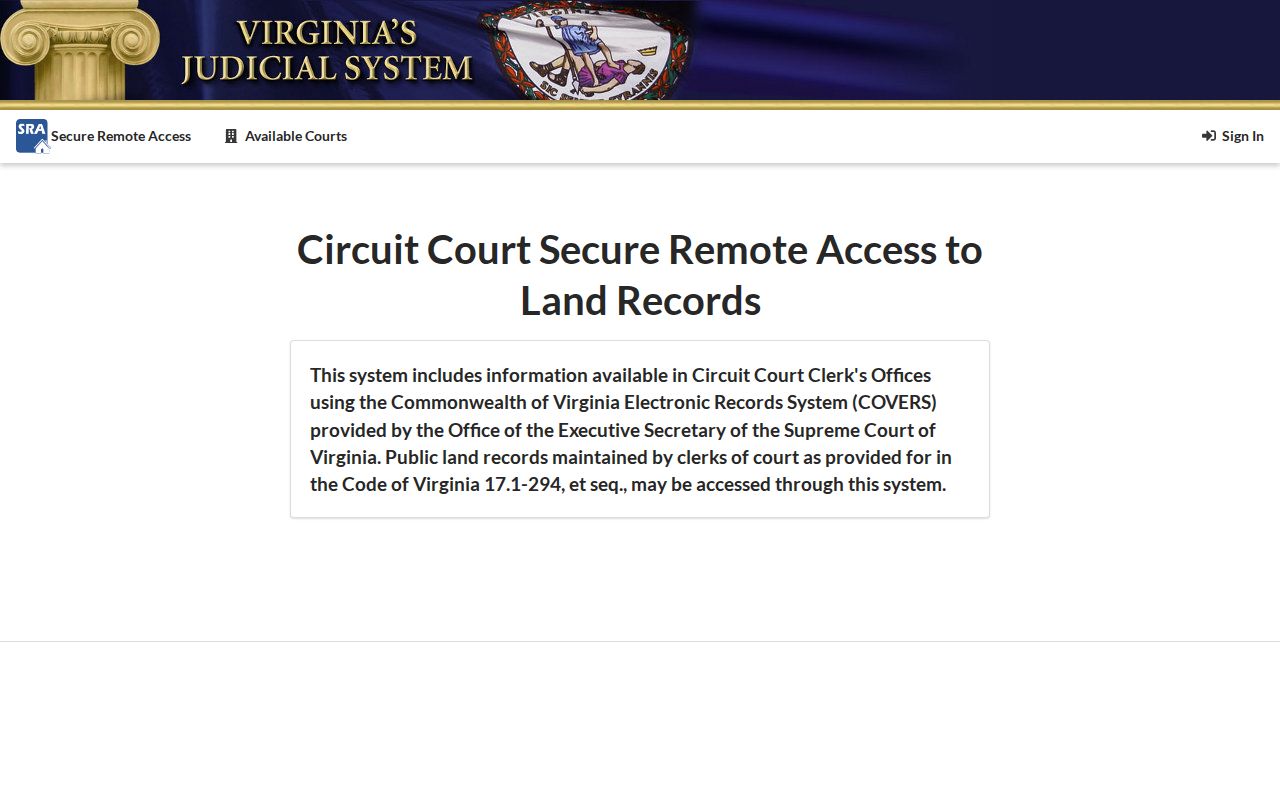
Take the party names and document reference from the SRA result. Then compare that citation against the county deed volume or archive copy. The 1916 index date is a transition, not the beginning of ownership records. A second boundary follows: images start January 1, 1940. So some names appear in the index while their deeds stay unavailable remotely. When the online chain stops, note the last grantor, grantee, legal description, date, and reference. Then turn to the LVA catalog for the matching older index. SRA index-only access may be free if the local Clerk enables it. Image viewing is subscriber-controlled, with each Clerk setting authorization. In person, the Clerk can provide a public terminal, old books, or archived materials. Save the exact citation before switching systems, or you restart with a name alone.
Walking Back Through Prince Edward County Deeds
A workable chain search moves back and forth between people and property descriptions. Find the deed that conveyed the parcel to the current grantee. That instrument's grantor becomes the next buyer to trace. At every step, compare the legal description, acreage, subdivision lot, and adjoining references, because a seller may have conveyed only part of a larger tract. Record each citation before moving on. A name alone can pull up deeds for unrelated land. The earliest era belongs to the Library of Virginia. Its Prince Edward microfilm finding aid lists deed books 1-47 for 1754-1902 and a general index covering 1754-1916. Old grantor and grantee spellings often differ from modern records, so search reasonable variants and fiduciary roles. Verify the volume and page against the cited book rather than trusting an index entry as the instrument itself. Consult the Library of Virginia Prince Edward microfilm finding aid for the county's deed-book and index range before any archive visit or request.
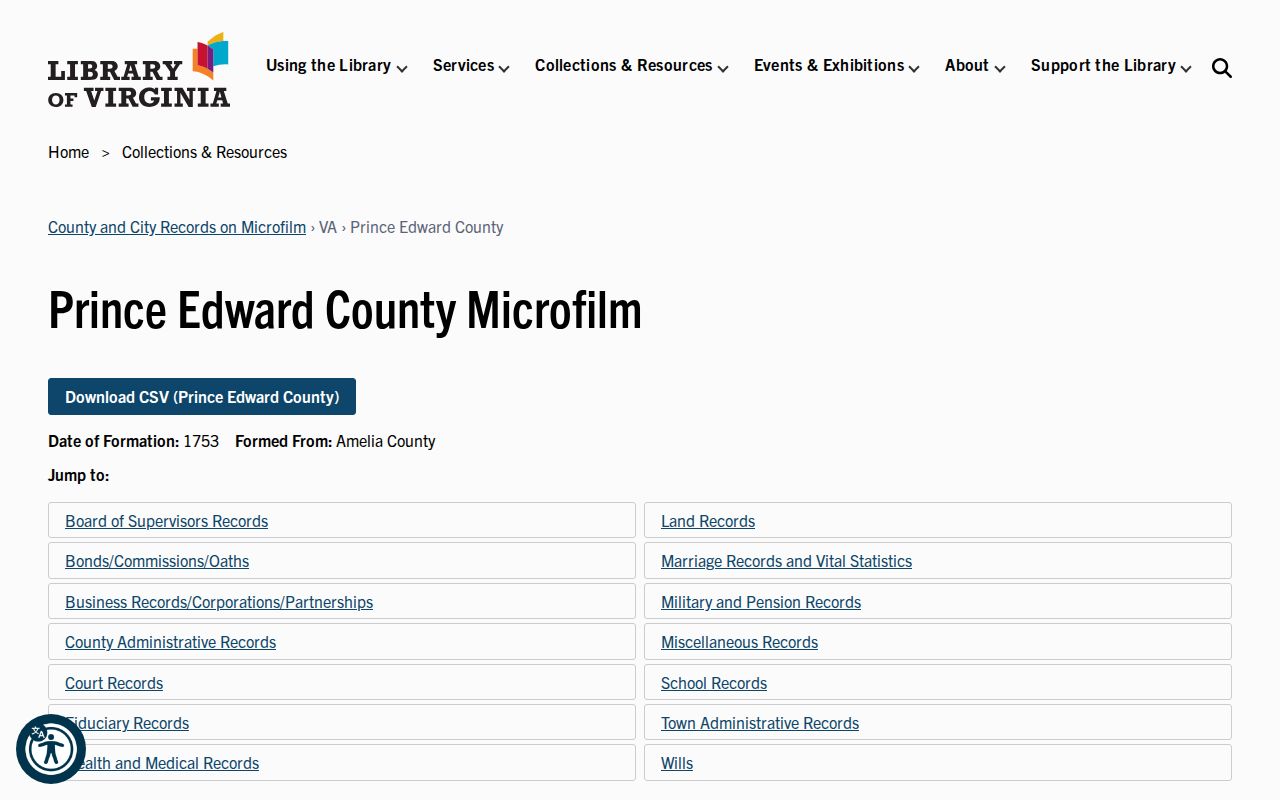
The finding aid describes film holdings. Not every reel appears as a browsable web image. Each step starts from the newest known grantee and moves to that instrument's grantor. Read the legal description at every transfer. Acreage, boundary calls, exceptions, access rights, and adjoining owners separate your parcel from another tract. That other tract may have been bought by someone with the same name. A chain built on party names alone can attach the wrong land.
- Use the county ownership record to identify a parcel and its present roll name.
- Find the newest deed with that name as grantee and save the full citation.
- Read the grantor, prior deed reference, and land description from the instrument.
- Search that earlier owner as grantee and repeat only when the land description still matches.
- At the 1916 index cutoff, switch to the general indexes and cited deed books.
- Grantor
- The party conveying the interest shown in a deed.
- Grantee
- The party receiving that interest.
- Chain of title
- The ordered set of conveyances affecting the same property.
- Legal description
- The deed or plat description used to match land through address changes.
Prince Edward County Historic Deed Books
Prince Edward County deed books stretch back before the Revolution. The county formed from Amelia County in 1753, and Book 1 opens in 1754. The Library of Virginia finding aid maps the whole run: Book 1 covers 1754 through 1759. Books 2 and 3 run through 1771. Books 4 through 19 carry 1771 to 1828, and Books 20 through 28 reach 1866. Books 29 through 47 end at 1902. General grantor and grantee indexes span 1754 through 1916. That span makes surname hunting across the full run possible.
Some quirks matter here. Early volumes may use unpaged indexes and odd folio marks. Note the index type and folio convention before requesting a scan or an interlibrary-loan copy. The Clerk's online index skips much of this colonial and nineteenth-century material. For those generations, the Library of Virginia catalog is the place to work. Record the collection title, volume, reel, surname range, and page as you go.
Chancery Files and Former Owners
Some transfers never look like a normal sale, and chancery is often the reason. Prince Edward County causes run from 1754 through 1953. Digital images are available from 1754 through 1913. A single case file can hold partitions, wills, deeds, and plats. It may also include notices, receipts, and even store accounts. Search the index by party and locality first. Then check whether the case has a plat or scanned pages worth pulling. Post-1913 material can sit unprocessed or unindexed. Those files may need an inquiry to the Circuit Court Clerk or Archives Research Services. The LVA Chancery coverage page spells out each locality's date range and image availability.
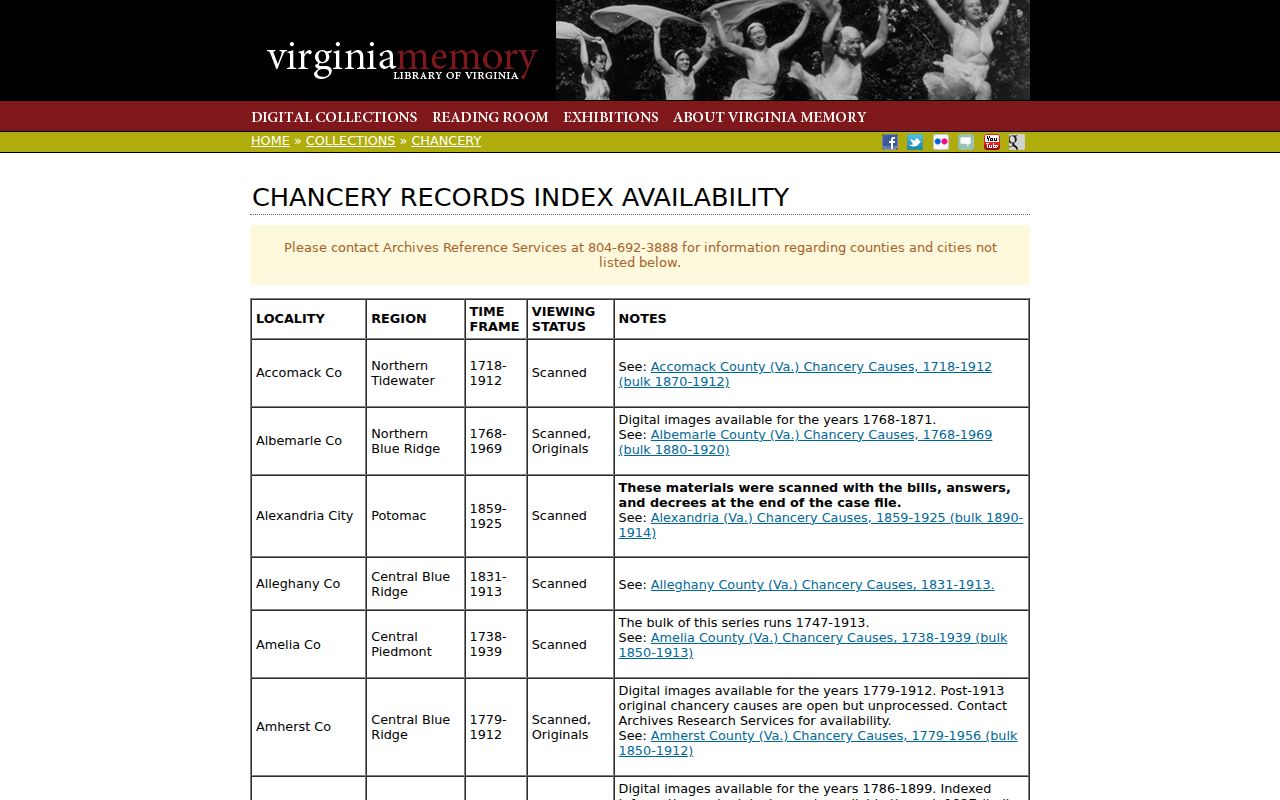
Chancery can name heirs and trace divisions in rich detail. Still, the recorded deed or court order remains the transfer evidence you must match to the parcel.
Estate Transfers in Prince Edward County
Not every Prince Edward County land transfer came from a sale. Prior owners often moved property through a fiduciary deed. Others used an executor's deed, an administrator's deed, a deed of distribution, or a court order. Search the decedent and fiduciary names in the land records. Then ask the Clerk about the estate file, inventory, appraisement, settlement, and any orders. An assessor owner string that reads "estate" or "trust" is only a hint. It will not tell you which instrument actually vested the land.
Virginia death records carry their own rules. A 25-year public-access period applies. Certified current records require a written request, proper identification, and the applicable fee. A death certificate proves death, not conveyance. The Virginia Department of Health request guidance covers those separate access steps.
Treat vital records as family context, and treat the deed or court order as the real proof of the property transfer.
Older Farmville Property Descriptions
Farmville dates to 1798. It was laid out on an irregular grid and has grown by steady accretion ever since. A historic deed may name a lot by street frontage, adjoining owners, acreage, or an old road name. It may do so instead of a modern street number. That shift matters for anyone tracing former owners. The DHR district descriptions reference High Street, Beech, Randolph, Grove, First Avenue, Second Avenue, Main Street, and the tobacco-warehouse areas. Use those clues to find historic context. Then follow the legal description and plat rather than assuming today's address marks the same parcel.
Town and county maps help orient the current parcel. A recorded plat or deed still controls its legal description. Nothing in the record supports a countywide street-renumbering schedule, a courthouse disaster, or a subdivision list for this period. So resist the urge to explain a missing link with an invented fire or map change. Let the deed chain speak for itself.
How Far Prince Edward County Records Reach
How deep do Prince Edward County property records go? The Clerk's published online index starts in 1916. The older Library of Virginia volumes and indexes reach back to 1754. The Chancery Index adds cases through 1953 plus an earlier span of digital images. No courthouse fire or countywide land-book loss haunts this county's story. When a name or parcel seems to vanish, test spellings and earlier road names. Also try adjoining owners, fiduciary roles, and parcel splits before calling the chain broken. Former owners often hide under a fiduciary or estate name rather than a simple grantee entry. So search those forms too.
Lawful use. Use former-owner research for house history, estate matters, and property due diligence. Do not use an old public record to track, expose, threaten, or harass a living person.